
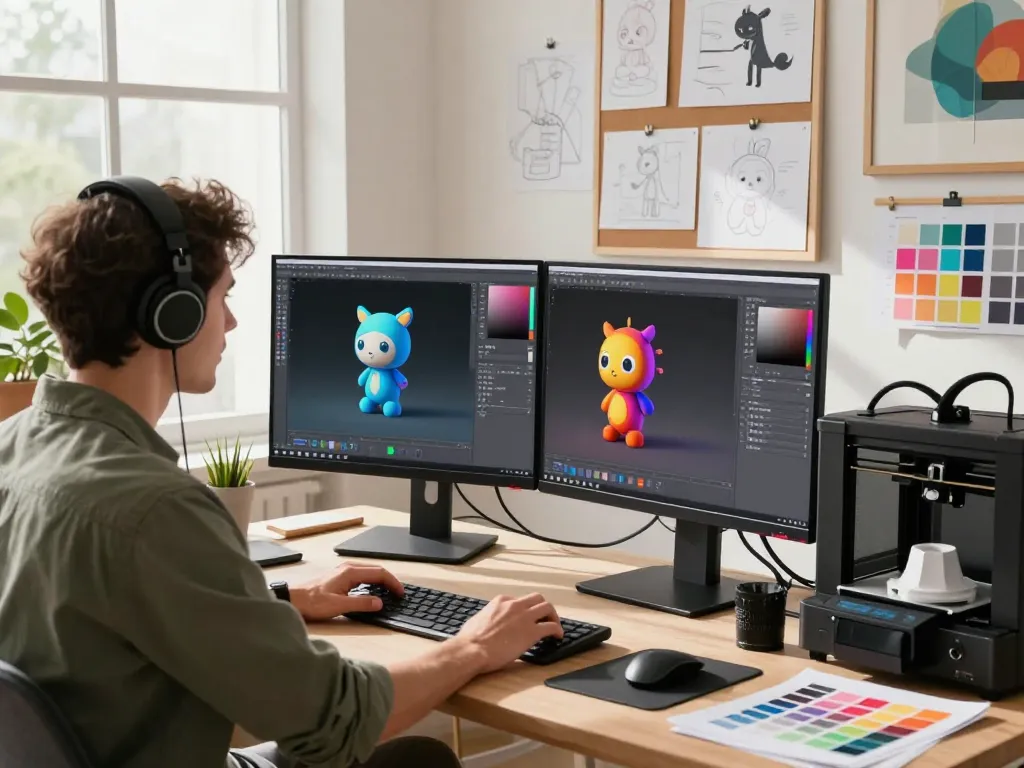
The Basics of Image to 3D Conversion
In the evolving landscape of digital design and prototyping, the capability to transform two-dimensional (2D) images into three-dimensional (3D) models is becoming increasingly essential. This technology, often referred to as Image to 3D, allows creators, designers, and engineers to convert their concepts into tangible models that can be used for various applications, including gaming, product design, and 3D printing.
What Is Image to 3D Technology?
Image to 3D technology utilizes advanced algorithms and artificial intelligence to analyze 2D images and generate corresponding 3D models. These technologies rely on complex computations that assess the depth, contours, and textures of the original images, leading to the creation of realistic three-dimensional representations. This process makes it possible for even those without extensive 3D modeling experience to create intricate designs rapidly and efficiently.
How Does the Conversion Process Work?
The conversion from 2D to 3D typically involves several steps:
- Image Selection: Users begin by uploading a suitable 2D image, sketch, or graphic. The quality and type of the image significantly influence the outcome.
- Processing: The software analyzes the image and extracts necessary features, such as shapes and colors, to construct a 3D model.
- Rendering: The 3D model is then rendered, allowing users to view it in a three-dimensional space, often with options to rotate and manipulate the model.
- Exporting: Finally, users can export the model in various file formats compatible with software used for 3D printing or animation.
Key Benefits of Transforming Images to 3D Models
Embracing Image to 3D technology offers several benefits:
- Accessibility: As these tools are often user-friendly, individuals with minimal technical skills can easily create 3D models, democratizing design.
- Efficiency: The conversion process is typically fast, enabling rapid prototyping and iterative design.
- Enhanced Visualization: 3D models provide a more comprehensive understanding of designs, making it easier to communicate ideas visually.
- Cost-Effective: Reducing the time and resources needed for traditional modeling techniques can significantly lower costs.
Common Challenges in Image to 3D Conversion
Despite its advantages, several challenges can hinder the effectiveness of image to 3D conversion tools. Understanding these issues can help users navigate potential pitfalls.
Understanding Limitations of Current Tools
One significant limitation of many conversion tools is their dependency on the quality of the input image. High-resolution images with clear contours yield better results, while blurry or low-contrast photos can lead to inaccuracies. Additionally, not all tools can accurately interpret complex images, which may result in overly simplified models.
Addressing Quality Issues in 3D Outputs
Quality can vary drastically between different software solutions. Users often experience inconsistencies in detail and realism in the final 3D model. Factors such as texturing, shading, and lighting are crucial for producing lifelike models, yet many tools fall short in these areas, leading to subpar outputs.
Overcoming User Experience Obstacles
While many of these tools are designed with simplicity in mind, some users may still find the interfaces challenging. A steep learning curve can be a barrier for individuals who are not tech-savvy, potentially discouraging them from utilizing these powerful tools effectively.
Best Practices for Effective Image to 3D Conversion
To achieve optimal outcomes, users should consider several best practices when utilizing image to 3D conversion technologies.
Choosing the Right Tools for Your Needs
Not all image to 3D conversion tools are created equal. Selecting a solution that aligns with specific needs—whether for prototyping, animation, or 3D printing—is crucial. Comprehensive reviews and comparisons can help guide the decision-making process, ensuring users choose the most suitable software.
Preparing Your Images for Optimal Results
Preparing images before uploading them can enhance results significantly. Users should aim for high-quality images with clear lines and distinct features. Adjusting the image to enhance contrast and brightness can also improve the processing outcome.
Techniques for Enhancing 3D Model Quality
Post-processing techniques can be employed to refine 3D models further. This might include adding textures, adjusting lighting, and fine-tuning surface details within 3D modeling software. Users can leverage additional features in CAD programs to achieve the desired level of quality and realism.
Real-World Applications of Image to 3D Technology
Image to 3D conversion technology has a multitude of applications across various fields, demonstrating its versatility and importance.
3D Modeling for Gaming and Animation
In the gaming and animation industries, the creation of 3D models is critical. Developers often require quick iterations and modifications, making rapid conversion essential for maintaining workflow efficiency. Using image to 3D tools allows artists to visualize characters and environments from concept art to finished assets seamlessly.
Utilizing 3D Models for Prototyping and Design
In product design, engineers and designers can utilize 3D models to create and test prototypes before committing to full production. This practice reduces material waste and allows for adjustments based on physical tests or user feedback. Designers can iterate on their concepts more effectively, leading to better final products.
Case Studies of Successful Implementations
Many companies have successfully integrated image to 3D conversion into their workflows. For example, an automotive manufacturer utilized this technology to visualize design changes in car prototypes rapidly, leading to faster development cycles and improved collaboration among teams. Similarly, a toy company reduced its time-to-market by using 3D models generated from sketches to finalize product designs quickly.
Future Trends in Image to 3D Technology for 2026
The future of image to 3D conversion is promising, with several emerging trends that are set to impact the industry significantly.
Emerging Technologies Impacting the Industry
Artificial intelligence and machine learning are at the forefront of these advancements, enabling smarter algorithms that can better interpret and convert images. This evolution will likely lead to tools that can understand context and depth more intuitively, enhancing the quality of 3D outputs.
Predictions for Enhanced User Engagement
As technology advances, user interfaces are expected to become more intuitive, making it easier for individuals of all skill levels to engage with image to 3D conversion tools. Enhanced user engagement predicts a surge in creative outputs across various sectors, from gaming to industrial design.
How AI Will Shape Image to 3D Conversions
AI’s role in image to 3D technology will continue to grow, with anticipated enhancements that will streamline the conversion process. Future tools may incorporate AR/VR capabilities, allowing users to visualize 3D models in real-world environments through augmented and virtual reality frameworks, bridging the gap between digital and physical creations.
What is the best software for Image to 3D conversion?
The best software for Image to 3D conversion varies based on user needs, but popular options include Meshy AI, Sloyd AI, and Tripo AI, each offering unique features suited to different audiences.
Can I convert images to 3D for free?
Many online tools and applications provide free image to 3D conversion services, although they may come with limitations regarding output quality or available features.
What types of images work best for 3D conversion?
High-resolution images with clear details, contrasts, and defined edges yield the best results when converted to 3D models. Images that are overly complex or lack clarity can produce poor-quality outputs.
How do I enhance the quality of my 3D models?
Enhancing 3D model quality can be achieved through post-processing techniques, including refining textures, adjusting lighting, and utilizing advanced software features to fine-tune details.
What are the latest trends in 3D modeling for 2026?
The latest trends in 3D modeling for 2026 indicate a shift toward AI-driven design tools, increased integration of AR/VR technologies, and the continued evolution of user-friendly interfaces that cater to a broader audience.